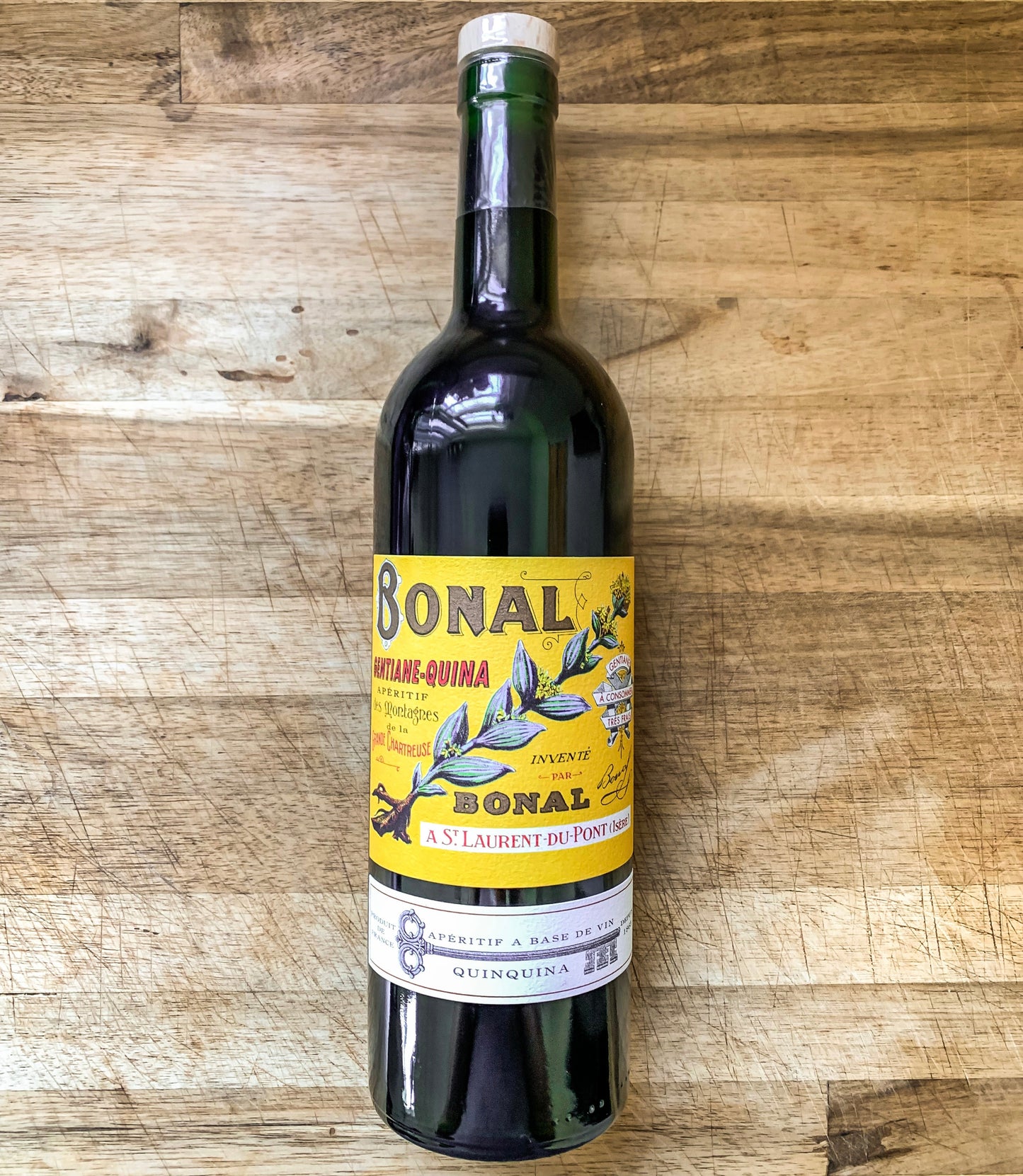
Distillerie Bonal
Distillerie Bonal Gentiane-Quina
Distillerie Bonal Gentiane-Quina
Couldn't load pickup availability
About Distillerie Bonal
About Distillerie Bonal
Born in 1826, Hyppolite Bonal was orphaned at the age of 12 and sent to the Grande Chartreuse Monastery. He became the abbey’s doctor after studying medicine and pharmacology in Paris and Lyon. After eight years in this role, he moved to the neighboring village of Saint Laurent du Pont to become a pharmacist. During meditative walks in the Chartreuse Mountains, Bonal collected numerous wild plants and herbs and studied their digestive and medicinal qualities. This led him to create his namesake fortifying wine in 1865. About Quinquina The beneficial properties of the cinchona tree were originally discovered by the Quechua, a people indigenous to Peru and Bolivia, who found it an effective muscle relaxant to calm shivering due to low temperatures. The Quechua would mix the ground bark of cinchona trees with sweetened water to offset the bark’s bitter taste, thus producing tonic water. Jesuit missionaries in the early 1600s brought this back to Rome, where quinine in unextracted form came into use to treat malaria, which was endemic to the swamps and marshes surrounding the city of Rome and responsible for the deaths of several popes, many cardinals and countless common Roman citizens. Quinine was isolated and named in 1820 by French researchers, the name being derived from the original Quechua (Inca) word for the cinchona tree bark, quina or quina-quina, which means “bark of bark” or “holy bark”. Large-scale use of quinine as a malaria preventative started around 1850, consumed in tonics or aperitif wines such as these. With other spices and wines selected to balance, many of these quinine aperitif wines became famous and sought out first as delicious and refreshing aperitif drinks.
Region
Region
Chartreuse Mountains, Saint-Pierre-de-Chartreuse, France
Technical Details
Technical Details